

In the modern retail landscape, the “digital shelf” isn’t just a placeholder—it’s your storefront, your salesperson, and your brand ambassador all rolled into one. When a customer lands on a product page, they aren’t just looking at a price tag; they are looking for trust.
That trust is a fragile thing. It’s built through high-resolution imagery, precise technical specs, and a narrative that resonates. If your data is messy, your brand feels messy.
The High Cost of “Content Chaos”

Most companies eventually hit the “spreadsheet wall.” Trying to manage 500+ SKUs across Amazon, Google Shopping, and niche marketplaces using only Excel and email leads to three inevitable (and expensive) frictions:
- Data Silos: Marketing has the lifestyle shots, Sales has the pricing, and Engineering has the specs. When they don’t talk, the customer gets a “Frankenstein” product page.
- The “Error Tax”: Inaccurate descriptions lead to high return rates and “out of stock” penalties. Statistically, MarketProvider users see 90% fewer errors once they centralize.
- Time-to-Market (TTM) Lag: If it takes you weeks to launch a collection because you’re manually reformatting CSVs, you’ve already lost the season.
The MarketProvider Ecosystem: From Storage to Activation
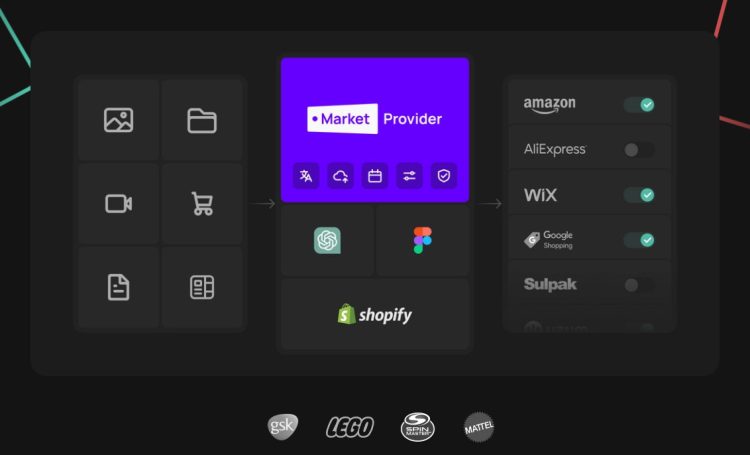
Truly effective teams are moving away from passive databases. They are adopting integrated ecosystems that don’t just “store” data—they activate it. MarketProvider (https://marketprovider.com/) acts as a command center for the entire product lifecycle through its core modules:
| Module | Purpose | Impact |
| PIM System | Central Hub | A single source of truth for all attributes and translations. |
| Syndication | Multichannel Export | Automated updates to marketplaces with platform-specific rules. |
| DAM | Asset Management | Connects photos and videos directly to SKUs with auto-formatting. |
| RADAR | Shelf Monitoring | Tracks prices and positioning across the web in real-time. |
| STUDIO | Content Generation | Mass-produces infographics and PDF catalogs in minutes. |
| Brand Portal | B2B Self-Service | Lets partners access up-to-date data without bothering your team. |
Efficiency by the Numbers
Transitioning to a PIM isn’t just an IT upgrade; it’s a financial strategy. The data from current MarketProvider users tells a clear story:
- 300% Average ROI within the first year.
- 4x Faster time-to-market for new product launches.
- 50% Reduction in manual tasks for content managers.
- 4 Weeks to see the first tangible results.
2026 and Beyond: Preparing for Agentic Commerce
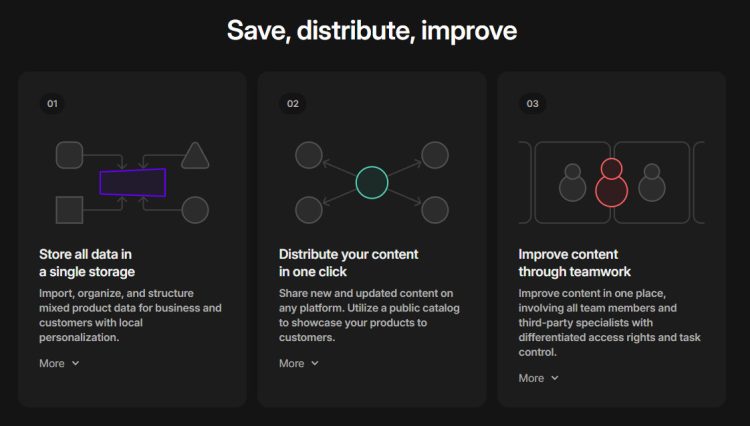
We are entering the era of “Agentic Commerce.” AI agents and smart assistants (like Google UCP) are now shopping for your customers. These agents don’t “browse” websites; they ingest data.
If your product information is unstructured or inconsistent, your products become invisible to the AI. Centralizing your data in a PIM like MarketProvider is no longer a luxury—it is the critical infrastructure required to remain discoverable in an AI-driven economy.
The Proof is in the Partners
Global leaders aren’t waiting around. Manufacturers like Lego, Mattel, and Haleon have already shifted to these centralized models. By ensuring their data is “veracious” and instantly distributable, they maintain a consistent brand voice whether a customer is shopping on their own site or a third-party retailer.
The Bottom Line: You can’t win at modern e-commerce using yesterday’s tools. Whether you are a mid-market brand or a global leader, centralizing your content is the only way to scale without breaking your workflow.
Stop managing spreadsheets. Start managing growth.
